
I’ve really come around to EVs. Initially a skeptic, I poo-pooed these modern rides for being cars without souls, as though I’m daily-driving a Boxster. Yeah right. My regular car is a Mazda6, albeit one with three pedals that I absolutely love to run. But my real daily life revolves around the three tiny humans whom occupy every waking moment of my day.
At this point, the Mazda is a snugger fit for them and really, for the 0.8-mile trips to and from all the local places that make up 92% of my drives, I’m not exactly channeling Andretti. For these short trips, an EV is where it’s at IMHO. Now, I’ve driven some of the latest and greatest in the electric vehicle lineup, but none are quite so suited to family duty as the Hyundai Ioniq 9.
Spacious, Fast, and Quiet
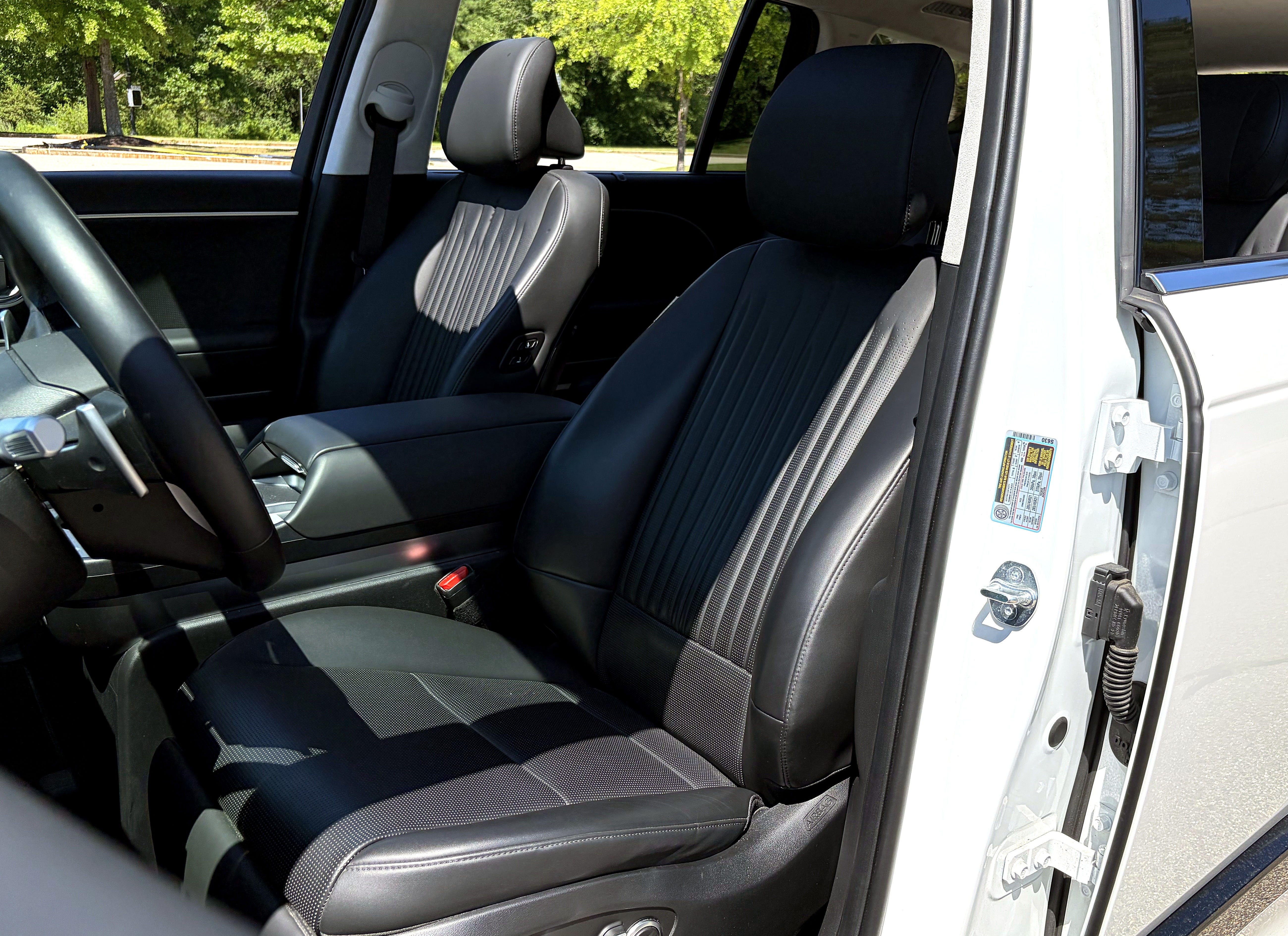
It’s big, with three rows, a flat floor, and giant windows. It’s fast as hell, which elicits grins from my face and squeals of shock from the passengers. And inside? It’s quiet. Like one of those isolation chambers’ float-in-a-tub-of-water quiet. When I want to enjoy the singing soul of an ICE-powered machine, I’ll rent a Miata on Turo.
But most of my time behind the wheel is spent fielding questions, struggling to survive the slop that passes for rap today, and tuning out bickering siblings. As they say, silence is golden, which is doubly true on those rare occasions I’m driving all alone. On that front, the Ioniq 9 delivers.
Hyundai Goes Wild On NVH
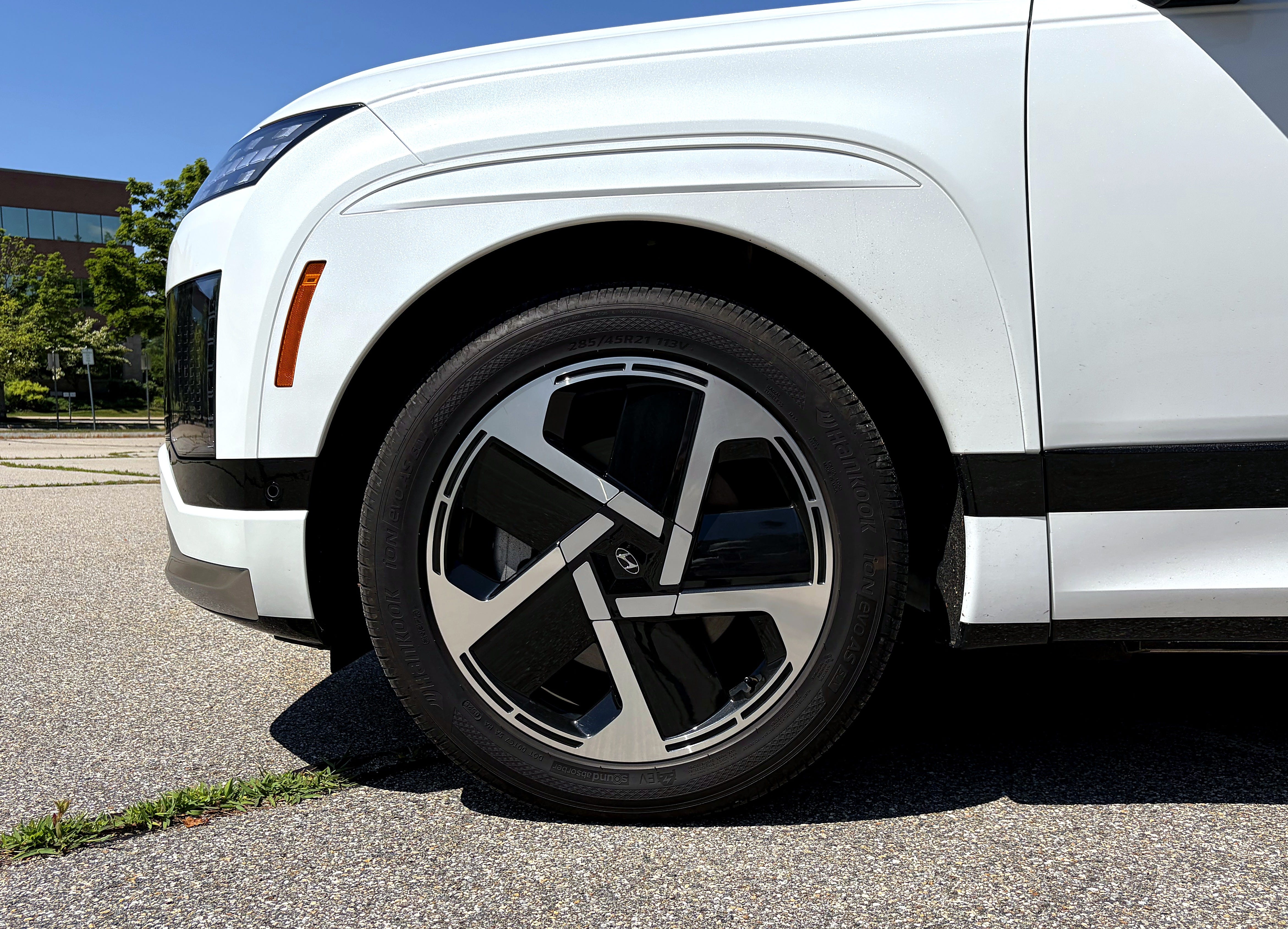
It’s not by happenstance. Hyundai apparently asked its NVH engineers to go bananas with the biggest Ioniq. To that end, you’ll enjoy the fruits of foam-insulated tires, triple door seals, and acoustic laminated glass that runs across the windshield and around to the windows on all four doors. There’s active noise control and special structural foam in the door panels. A bonanza of noise suppression really.
Rocket Ride


Where the Ioniq 9 lacks in enthusiast-stirring sounds, it makes up for with bonkers acceleration. Car and Driver clocked this Calligraphy model at 4.4 seconds in the 0-60 run. That qualifies as fast for any car, but especially so for one weighing in at 6,000 pounds. It is a bizarre sensation, all that metal hurtling forward with the only drama found in a hood suddenly reaching for the sky, and no noise to speak of. Fun is also a word that comes to mind.
As the top-of-the-food-chain variant (technically the Calligraphy Design is more expensive due to fancy wheels and matte paint), this Ioniq 9 is packing serious powertrain hardware. Across the board, a 110-kWh battery pack provides the juice. In Calligraphy-spec, it feeds a pair of 157-kW electric motors - one at either end - to generate 422 horsepower and 516 lb-ft of torque that gets sent to all four wheels.
The base Ioniq 9 S makes do with a single motor that is tuned for 215 hp and 258 torques. It won’t be as fast as the Calligraphy, but at $60,555 (including destination), it’s some $16,000 cheaper. Range is only marginally better on the entry-level trim - 335 miles versus 311 - but of course, you miss out on all the frills.
Calligraphy Exclusives
As in special front and rear fasciae, a panoramic moonroof surrounded by a suede headliner, perforated soft-touch door panels, massaging front seats, climate-controlled captain’s thrones, a head-up display, a 14-speaker Bose audio system, and so on, and so forth. Hyundai may be aiming the Ioniq 9 at the luxury set, but its long-running value proposition still stands. 16 thousand bucks is a big base-to-top-spec premium. But I’d argue it’s justified by the relatively huge powertrain upgrades and list of content improvements that are too long to list here.
Driving The Ioniq 9
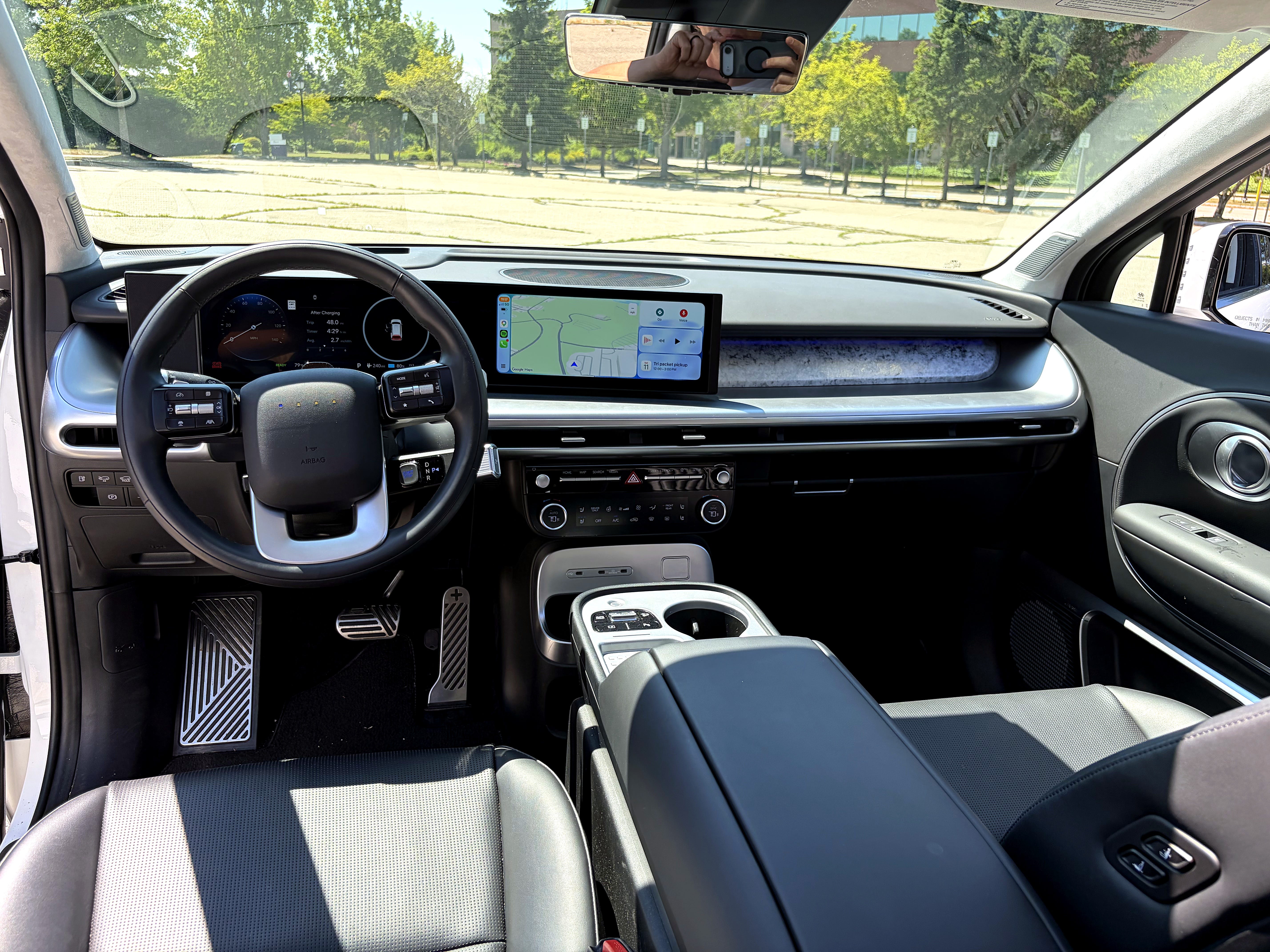
Behind the wheel, I found the 2026 Ioniq 9 as composed and softly-sprung as you’d expect of a $76,000 family hauler. Most harsh surfaces are quietly absorbed by the self-leveling dampers, a remarkable feat given the 21” rims. However, I did encounter an odd rear axle sideways hop over sudden, sharp surfaces like recessed roadway storm drains.
I also didn’t love the level of interference from the various rear-facing driver assists. There are many, and one of these systems likes to drill the brakes when you’re backing out of a parking space into traffic. It’s jarring and requires that you press the brake pedal to get moving again. Not great. The 1-pedal driving, however, is great. Very great.
The Ioniq 9’s regenerative braking system is adjustable from no regen all the way up to full 1-pedal driving. It takes some getting used to, mainly when coming to a full stop, as the car lurches nauseatingly if you come off the pedal too quickly. Master it, however, and the service brakes largely become a thing of the past.
Hyundai’s Spaceship Design Language


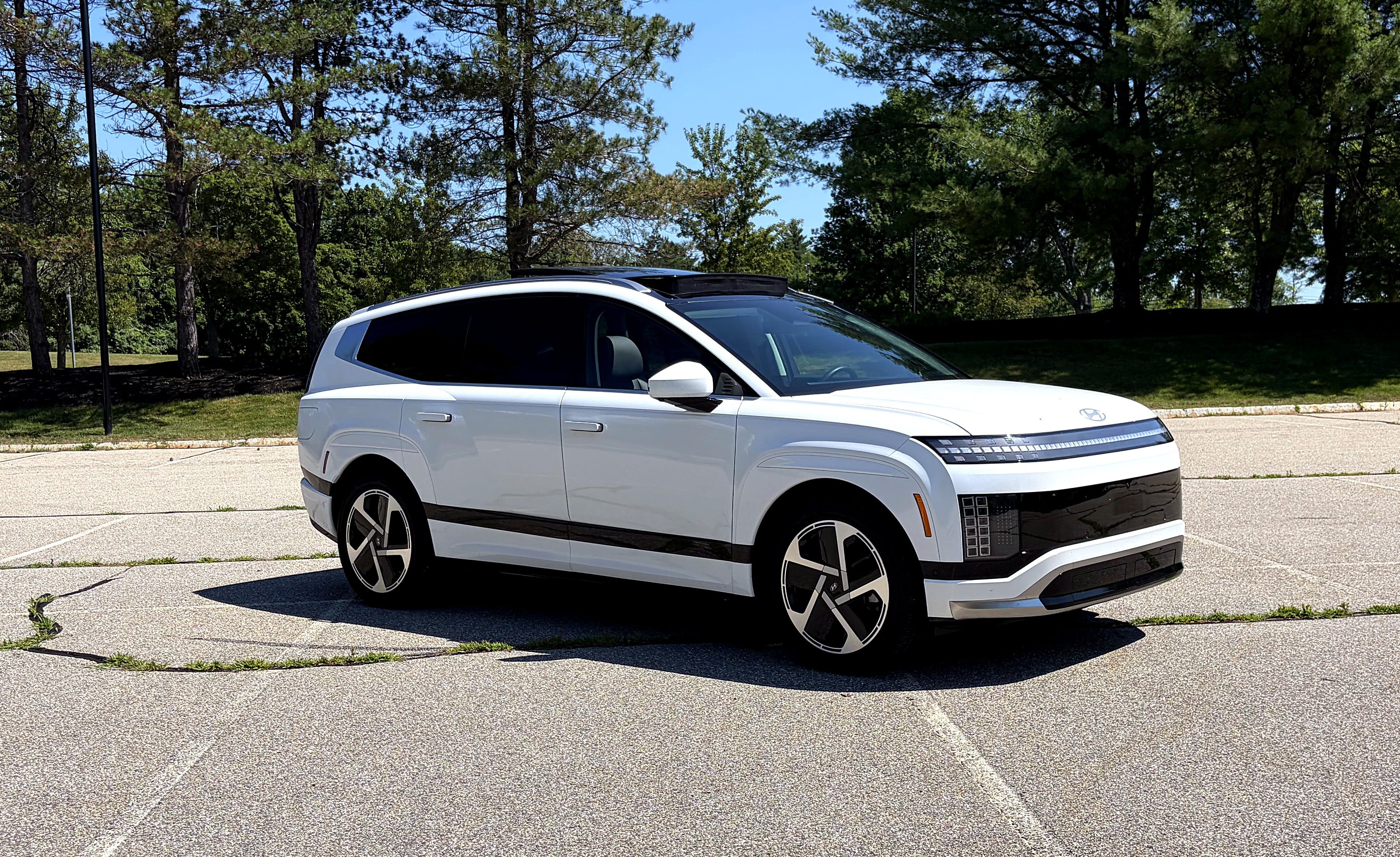
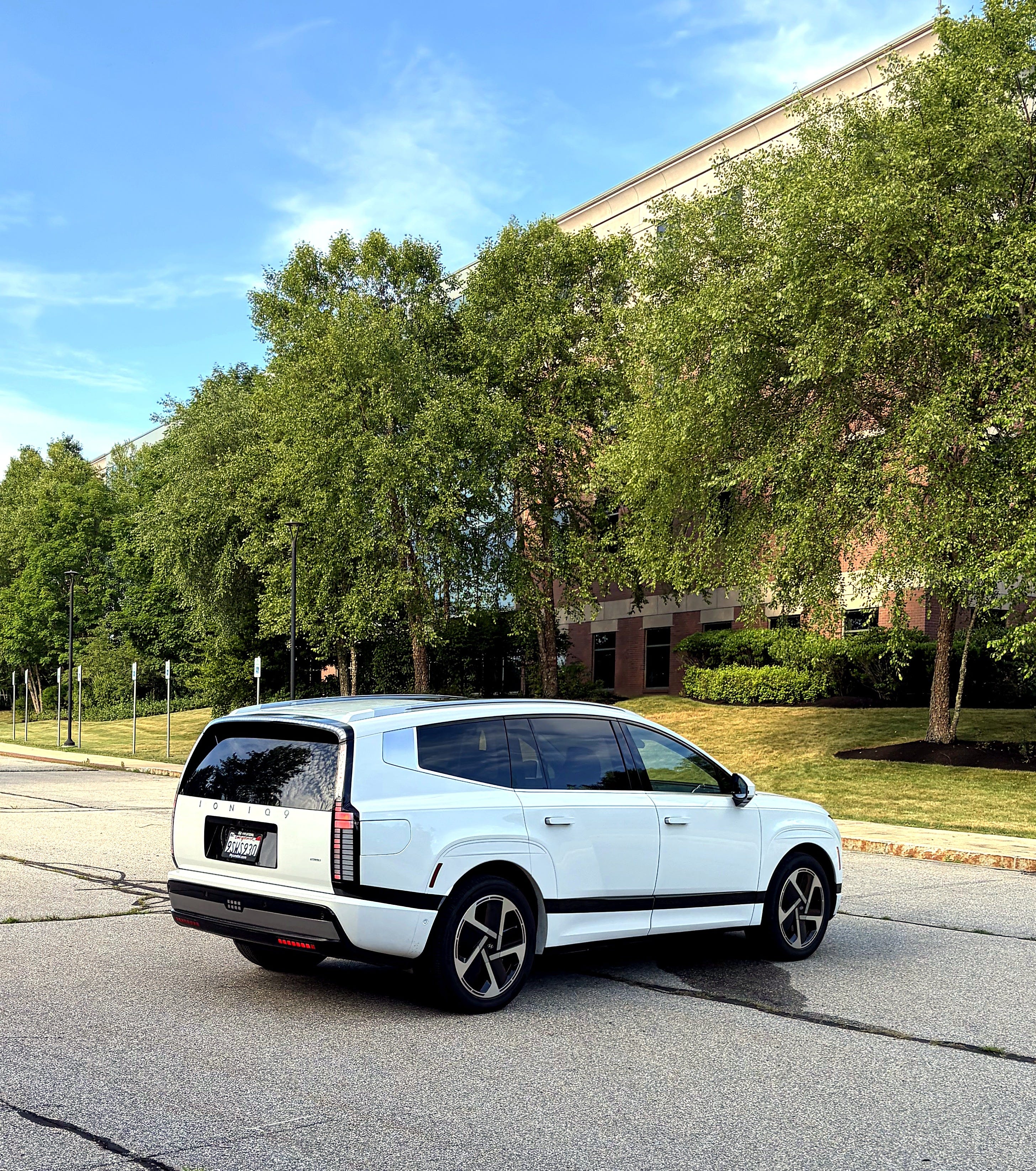
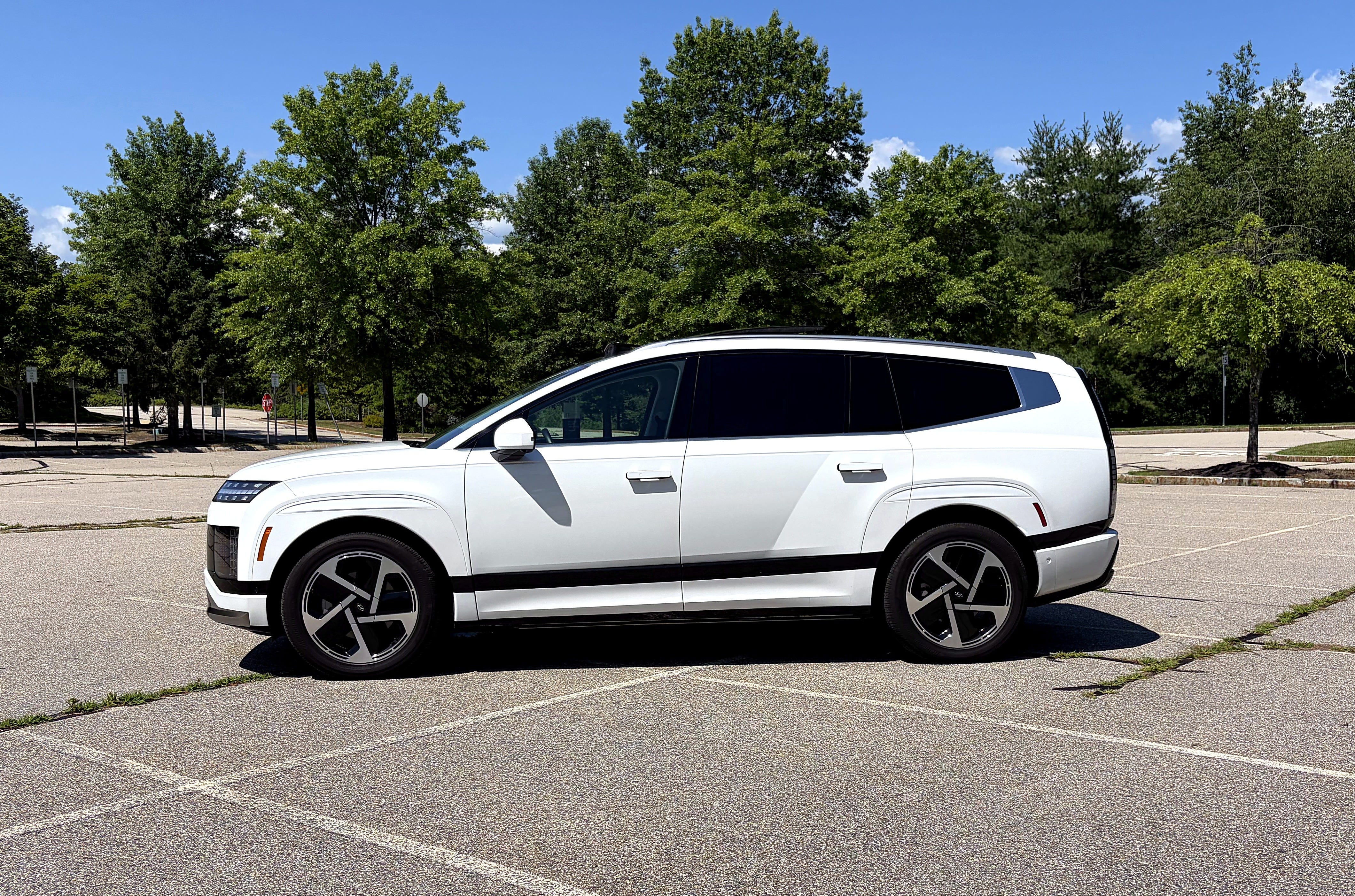
Now, pardon me while I gush about the 2026 Ioniq 9 styling. If you, like me, tire of the typical, generic crossover design aesthetic (read: anonymous blob), go lay eyes on an Ioniq 9. Hyundai uses all manner of fancy marketing-speak to describe it, which is encapsulated with the word “aerosthetic”. I don’t know what that means, but it definitely describes the Ioniq 9.
I would say it looks like a spaceship. But, like, a really cool spaceship. Specifically, a spaceship that doubles as a car and can, in fact, fly across the solar system. You know, like the Starcar featured in the widely-acclaimed 1984 Disney hit, “The Last Starfighter”. Doesn’t ring a bell? It’s okay, I’ve produced my own award-winning film below to explain this theory.
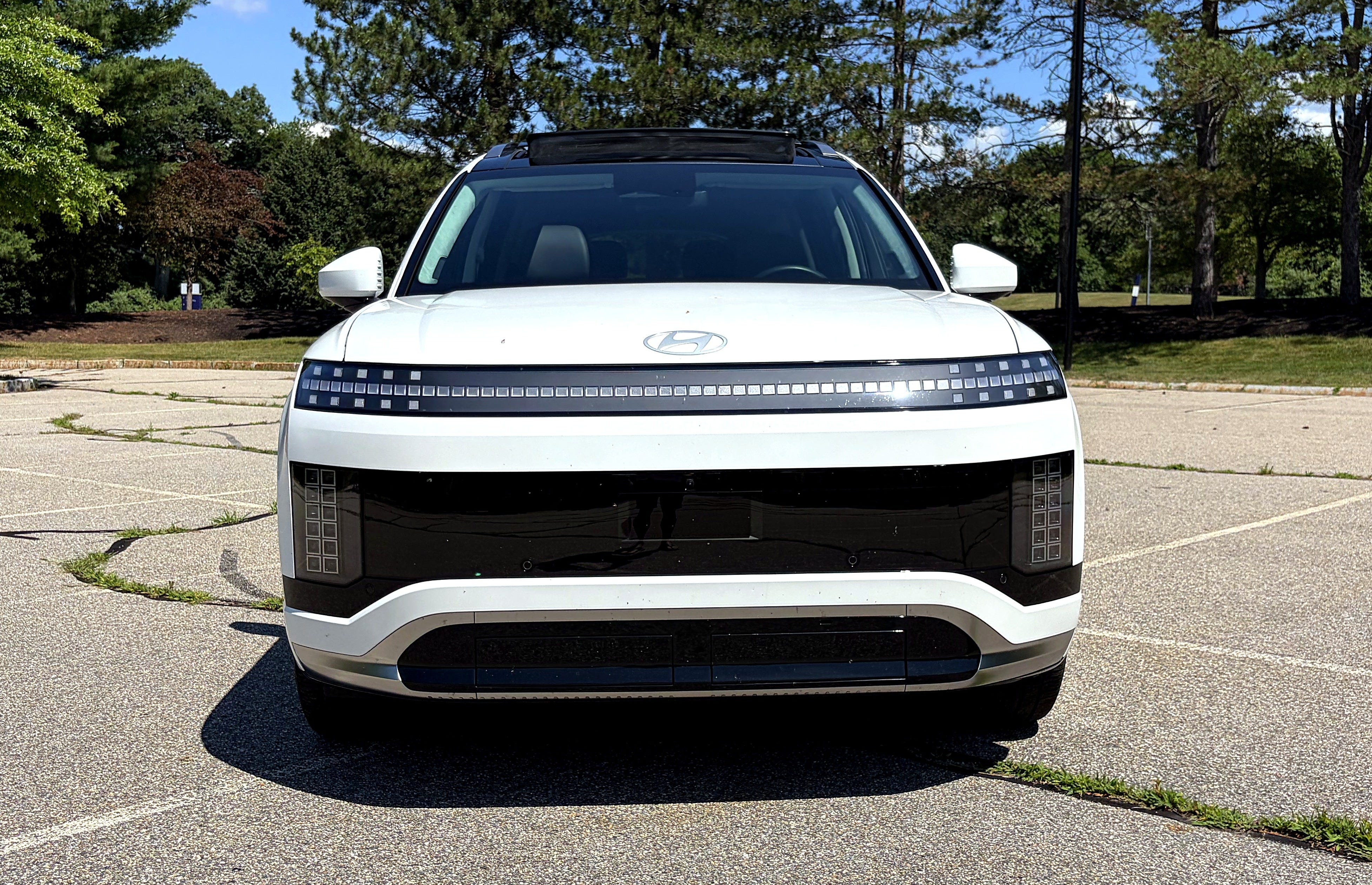
Hyundai calls the front and rear lighting treatment on the Ioniq 9 “Parametric Pixel”. Again, no idea on the meaning, but absolutely in love with the actual headlights and taillights on this EV. They blink and animate, seemingly trying to communicate, which the front-end apparently does; displaying the letter H in Morse code upon startup.
Big-Time EV Charging Numbers
When it comes to charging the Ioniq 9, Hyundai notes impressive figures, like going from 10-80% in just 24 minutes. That requires 350-kW DC Ultra-Fast charging versus a 250-kW Tesla V3 Supercharger. The Ioniq 9’s NACS charge port is Supercharger compatible, but figure on 40 minutes with a V3 unit. That said, I think the lion’s share of charging in this case - family EV - is going to be done at home, overnight.
I don’t have a Level 2 charger, so I just relied on the household plug in my garage, which qualifies as Level 1. It only added a 1% charge per hour, but that was enough in my case. I do work from home, but unless you’re constantly driving during the day, that 110-kWh battery pack and 311-mile range should leave enough room to get around town without too much anxiety if you keep it plugged in otherwise.
V2X Possibilities


An interesting aspect of this big battery is Hyundai’s stated goal of using the Ioniq 9 as a platform for V2X, otherwise known as vehicle-to-whatever thing you need power for. That starts with the existing V2L bi-directional charging cable that can be used to power up electronic gear directly from the vehicle’s battery.
However, there are plans to expand that capability into V2H for powering your home during an outage and V2G for sending electricity back to the grid for high-demand scenarios. It’s unclear when the full scope of V2X will be made available, but considering a Tesla Powerwall offers just 13.5 kWh of capacity, the 110-kWh pack in the Ioniq 9 makes a compelling case for putting it to use beyond just powering the car.
Is The 2026 Hyundai Ioniq 9 Worth A Look?
Buying a new car is typically driven by budget, and there’s no denying the 2026 Hyundai Ioniq 9 is on the pricey side. However, the pool of 3-row EV crossovers is not very deep at the moment, and among those choices, a $60,000 entry point is relatively reasonable. The Kia EV9 is technically the cheapest, and that model starts at $56,545. A $60,000 to nearly $80,000 swing certainly brings a whole host of nice touches when you look across the entire 2026 Ioniq 9 lineup, but even in base S form, it is one nice battery-powered family-friendly crossover.
About the author: Niel Stender is an automotive journalist. See more of his work on MuckRack.