
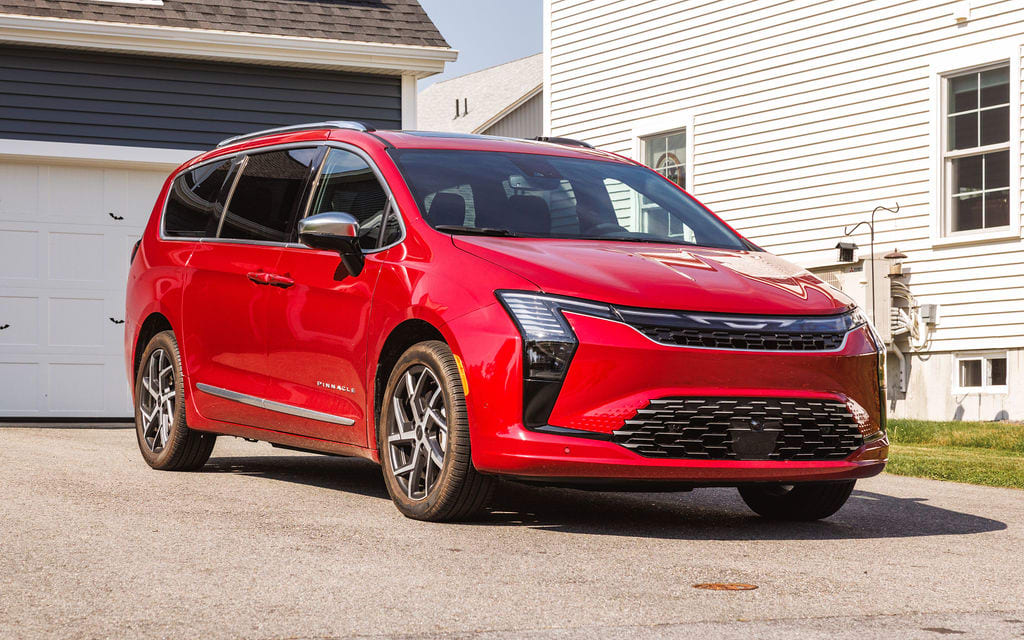
Crossovers have taken over the auto industry. This is nothing new. I’ve been whining about it for a long time because I’m hard-pressed to find lines on most of these rigs that represent an improvement over a clean sedan or *be still my heart* a station wagon. But I’ll get over it, unless that is, you count children among the members of your family.
All photos by Tyler Stender
Making A Case For Minivans


In that case, there is no world in which the mighty crossover segment outdoes that red-headed stepchild of the car world: The minivan. It’s funny to think of the 2027 Chrysler Pacifica Pinnacle I recently drove in that context, given its fabulous Red Hot Pearl finish. However, this is the world we live in and what the Pacifica must face. Too bad as the Pacifica is a solid all-arounder worthy of any family’s consideration.
Chrysler invented the minivan 42 years ago, the naturally aspirated 3.6L Pentastar V6 under the hood went into production 15 years ago, and the Pacifica in its current state - not to be confused with the prior crossover variant - has been on sale for 10 years. Point being, the 101-year-old automaker knows what owners want in a minivan, has had ample time to fine-tune the Pentastar, and is clearly onto something with the basic Pacifica formula. On that latter note, I would argue that Chrysler is in “if it ain’t broke, don’t fix it mode.”
The Pacifica Is Aging Well


Few cars continue to look fresh after a decade in production, but the Chrysler Pacifica sure does. Really, it’s one of the cleanest designs in the segment, with a sleek swept-back look that has aged well. The 2027 front-end refresh with its sharper LED headlight shape and “piano key” corner layout works and serves to keep the look alive.
If you exclude the Kia Carnival - which I happen to like the looks of - for purposely aping an SUV, I think Chrysler’s minivan is the handsomest of the current bunch. A small bunch, to be sure, with the Toyota Sienna and Honda Odyssey the only other options. Were the Ford Transit Connect still in production, I’d place it atop the minivan styling podium, but that’s really getting into the weeds.
No PHEV, But A Worthy Pentastar
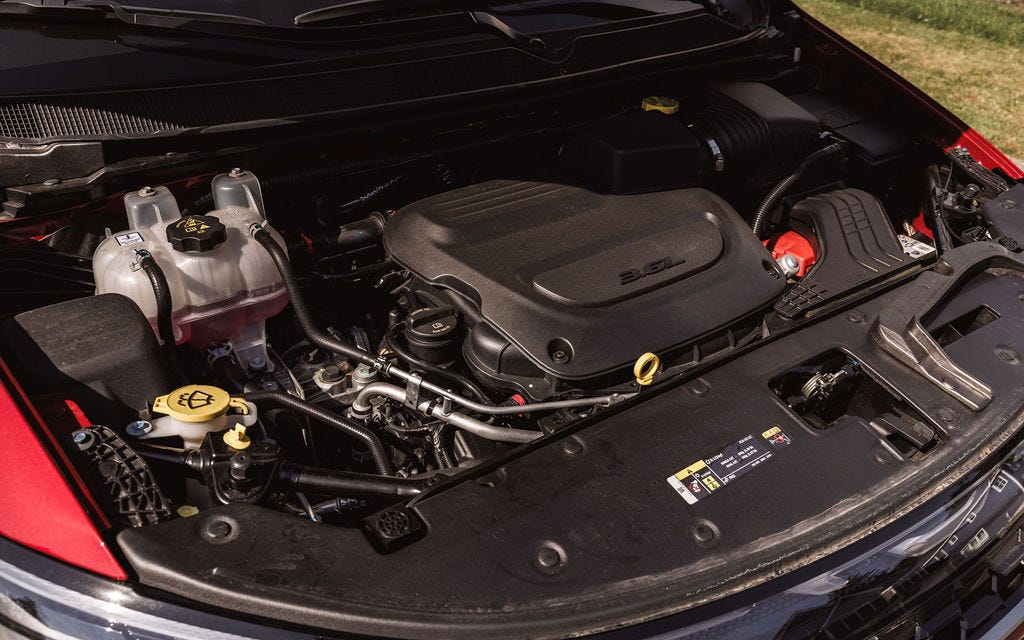
Now about that Pentastar V6. Up until early 2026, this long-running mill was available in the Pacifica as either a free-standing lump or paired with dual electric motors and a 16-kWh battery pack (circa 2025) to create a plug-in hybrid (PHEV) variant. Now discontinued, the Pacifica PHEV was rated for 30 mpg combined versus 22 mpg for the non-hybrid FWD Pacifica and, crucially, 32 miles of battery-powered driving range.
To me, that ability to get around town without using gas is ideal for anyone with kids who is familiar with the Groundhog Day-like looping of your town and the surrounding area that comes with school and activities. And I’m not alone. Reddit is full of folks who were doing just that and rarely visiting the pumps. So I thought it odd that Chrysler canned this key differentiator in the minivan segment as no competitors offer a plug-in hybrid.
But I have to say, the non-hybrid version of the 3.6L V6 is a smoothie. It makes 287 horsepower and 262 lb-ft of torque. A 9-speed automatic sends power to the front wheels, or all four if you opt for the $2,995 AWD system as with the example I drove for a week. It pulls confidently on the highway and putters around town with nearly imperceptible shifting happening in the background. Seems there’s something to be said for all those years of powertrain development.
Now, the AWD Pacifica is only rated for 20 mpg combined. But I did hit that exact figure in mixed driving and it’s right in line with what Kia and Honda offer. Would I prefer a hybrid option? Absolutely. But Chrysler’s parent-company Stellantis is working on some innovative range-extender style hybrid engines, and per the spokesperson I heard from, as part of the brand’s FaSTLAne 2030 plan, new electrified solutions are coming. It’s just not clear when and if that includes the Pacifica.
Stow ‘N Go…Everything


So what about Stow ‘n Go? This signature system has been part of the Chrysler minivan game for over 20 years and is one of those things that some have copied, but none have figured out quite so well as the original. With the 2027 Pacifica Pinnacle, it’s part of a broader system, one I have affectionately dubbed Stow ‘n Everything. First up, Stow ‘n Go which refers to stowing the seats within a floor cavity. On the Pacifica Pinnacle, this applies only to the third row, which features power-operated stowage.


On this particular Pacifica, the second-row captain’s chairs do not drop into the floor, but you can remove them. The process is easy - flip a lever and hoist away. However, these are bulky, awkward, heavy-ish things, so proceed with care. Should you proceed, you’ll be left with an enormous empty minivan cavity for filling to the gills with stuff.


Stow ‘n Vac refers to the integrated Pacifica vacuum cleaner. It is not a gimmick. Instead, it’s a fully functioning vacuum that lives in the driver-side wall just behind the middle row. The tube is long enough to reach all throughout the cabin, and it really works. Finally, there is Stow ‘n Place, a cleverly hidden set of cross bars for the roof. Perhaps the most discreet stowage system, it is located within the Pacifica’s roof rails and - with a couple of hand-loosened bolts - opens up into a full-width set of cross bars for mounting gear.
Behind The Wheel Of The Chrysler Pacifica
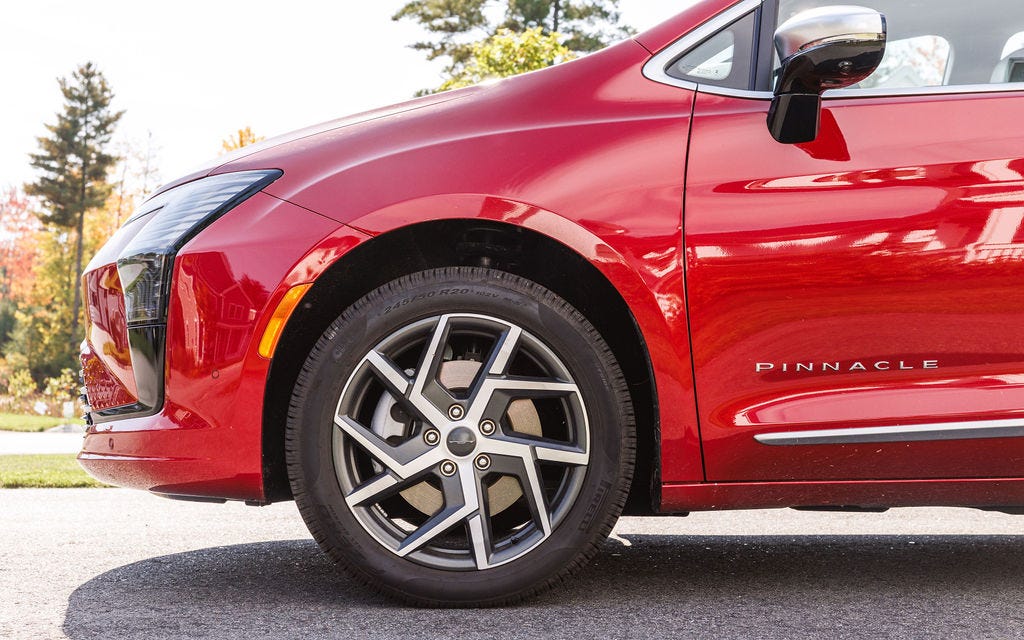
Ride comfort is impressive with the 2026 Chrysler Pacifica Pinnacle, which rides on 20” wheels. The new-for-2027 Blue Agave leather looks good, and in this range-topping spec, front-row occupants enjoy climate-controlled buckets. That’s nice, but a gripe of mine is that you must engage with haptic controls on the infotainment display to activate the warming and cooling feature. Hyundai goes the haptic route with these controls on its latest Santa Fe, but within a dedicated panel that makes the process less distracting.
Those in the second row make do with “just” heated cushions. It’s an airy space and one clearly intended to help families spread out. When fitted with the optional rear-seat entertainment system ($2,995), you’ll find it’s also intended to take the stress out of road trips.
The Pacifica’s Hidden Analog Trick


I’ll be honest, the Blu-ray player hiding at the bottom of the center stack threw me at first. Why the heck is Chrysler fitting such ancient technology to its latest and greatest minivan? Then I dropped in a copy of Orange County and immediately realized the benefit. To be clear, the dual rear-facing displays that come with this optional package offer the full gamut of streaming zombie-vision for your little ones - with a data plan.
But I say skip the cost and stick with the Blu-ray player. It requires no additional fees, while avoiding the aggravation of signing in to each service and inevitable arguments over which screen plays what. That latter factor being of special note if you, like me, have three small humans to entertain. Instead, tell them what’s being watched, load a DVD, and that’s that.
Familiarity Breeds…An Easy-Driving Minivan
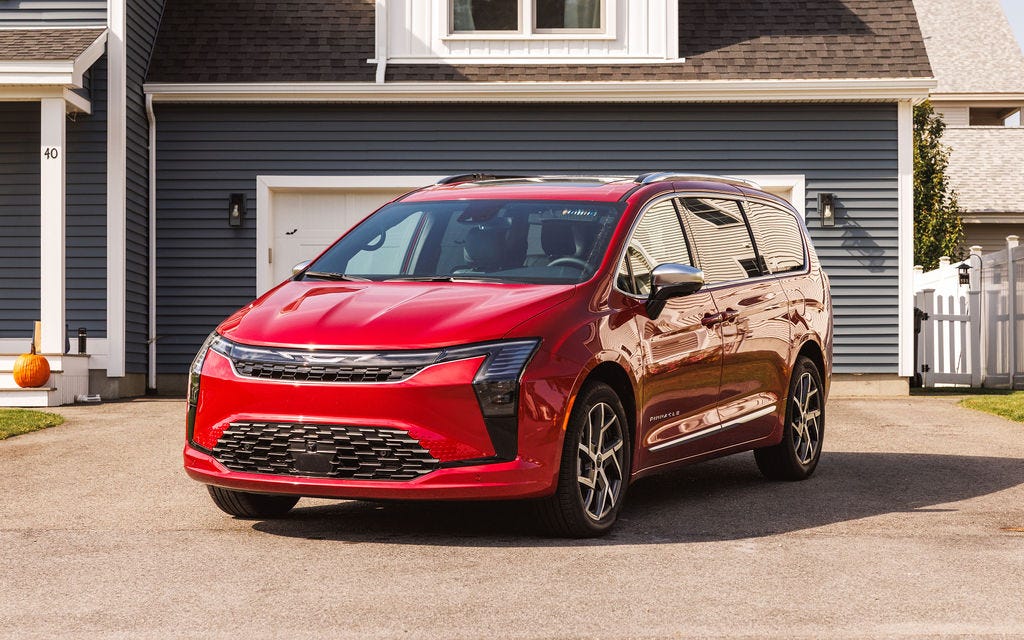
There is something innately familiar with the Chrysler Pacifica. Yes, it is a commonly available rental fleet model, so there’s a good chance I’ve previously spent time in one - it has been on sale for 10 years after all. And there are small touches that point to this. Like a bit of hard black plastic running along the center console with questionable fitment and instrument panel gauges that seem a step behind.
That said, it is an easy vehicle to get in and drive. This counts for a lot in our current automotive era where every model seems dead set on reinventing an unbroken ergonomic wheel. In the Pacifica, the PRNDL is of the rotary variety, but is immediately familiar and ready for no-look use. Aside from the haptic seat climate controls, physical buttons are many. Visibility is broad, and overall, you can just get in and go. The Chrysler Pacifica may be somewhat long in the tooth, but it’s still a solid choice for anyone willing to step outside the crossover craze and get themselves into a minivan.
About the author: Niel Stender is an automotive journalist. See more of his work on MuckRack.