
Subaru was one of the last mainstream station wagon holdouts here in the crossover-crazed USA, and I like wagons. There’s the recently departed Saab 9-5 Aero wagon, driving vintage wagons at Volvo HQ, a discussion with my mom and her long history with the station wagon, my thoughts on the dad dream wagon Golf Alltrack, and I haven’t even written yet about the 2006 Volvo V70R 6-speed I once owned. But you see my point. “Hello, my name is Niel, and I have a weird thing for wagons.”
So you might imagine my dismay upon learning that Subaru was turning its sole remaining Stateside station wagon into a crossover. However, I recently got behind the wheel of this latest 7th-gen Outback and it turns out, much of my whining is unfounded. After a full week of testing, I found plenty of areas that the 2026 Subaru Outback Wilderness shines — and a couple where it doesn’t.
A Fresh-Faced Outback


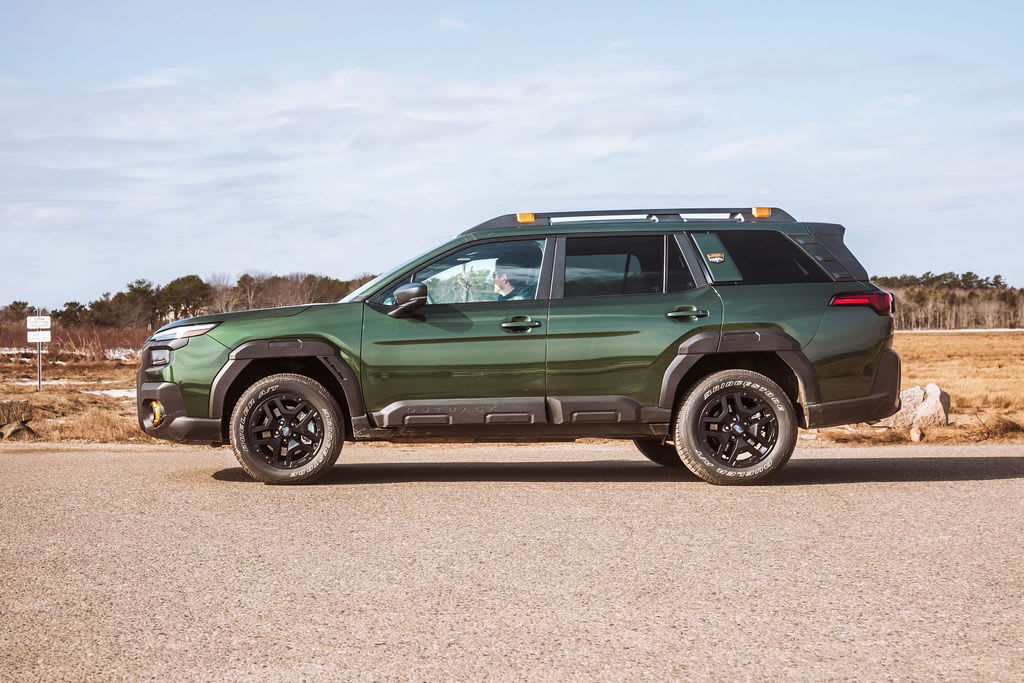
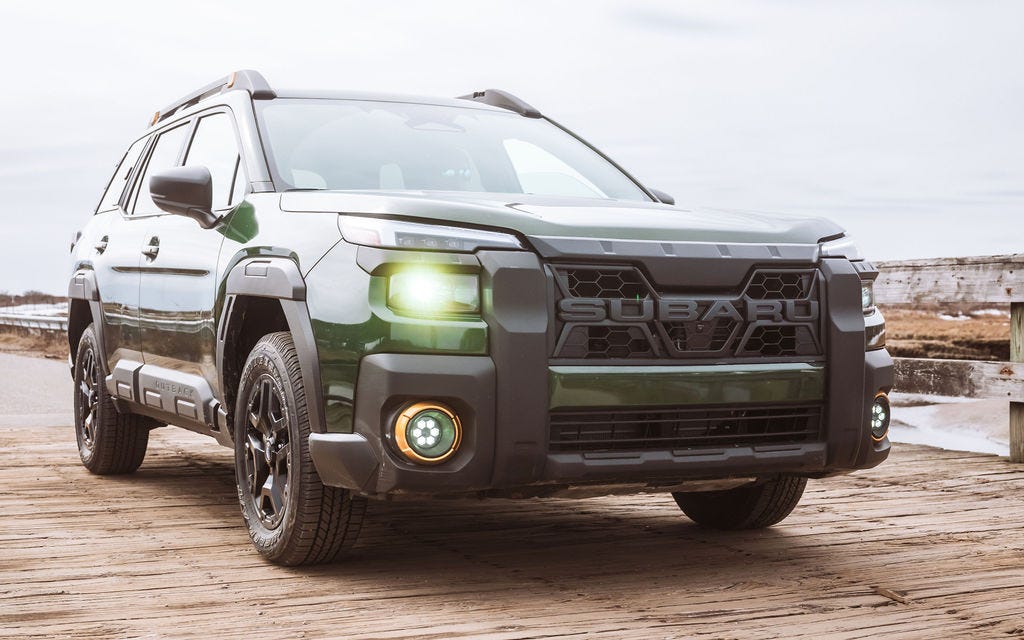
About the all-new Outback’s styling. In photos, I wasn’t a fan. But in person, it’s a better look, at least in Wilderness trim. Blocky and upright are terms that come to mind, though the black plastic cladding is a wee bit overdone. In profile, the 2026 Outback almost cuts a wagon line, but not quite. There’s no denying this is now a crossover. And hey, if it means Subaru can sell more, I say go for it. Because, styling aside, this is a pretty nice ride.
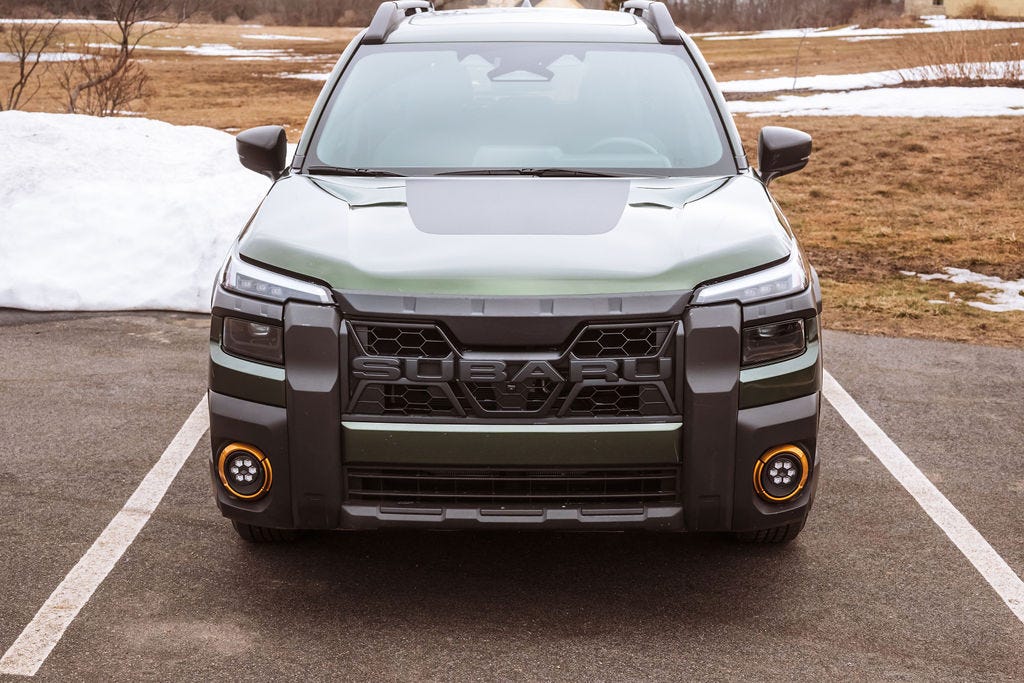
Dressed up in Deep Emerald Green Pearl, this Outback is a looker, and I was already a fan of the Anodized Copper highlights that designate it as part of the Subaru Wilderness club. They pop nicely and pull you into the beefy front fog lights, chunky pillar badging, and that roof rack, which deserves a special mention. Were you to use this car as its marketing team hopes and do some off-grid overlanding, you would need a place to sleep.
Wilderness Doodads


In Wilderness trim, the copper-trimmed roof rack will support 800 pounds. Enough for a full-on rooftop camping party. A static party that is. You can’t drive with an 800-lb gorilla on the roof. But that’s considerably more than the 661-pound limit of the Land Rover Defender, a considerably more capable off-roader. Other Wilderness-exclusive bits include white-letter all-terrain tires, a jacked-up ride height, trick dampers, and Dual Function X-Mode.
Along with looking sharp, those Bridgestone Duelers bring a chunky tread to the rough road party. Regular Outbacks offer impressive ground clearance at 8.7”, but this Wilderness goes further, boasting 9.5”, which is 1.2” more than a Honda Passport TrailSport and its rugged ideals. Then there are the adaptive dampers, which really set this Subie apart.
What Sarah Says
My wife, Sarah, is the polar opposite of a car person. Look to this section for her unfiltered thoughts on the car of the day.
“Well, we finally look like we belong in New Hampshire!”
Adaptive Dampers and Dual Function X-Mode
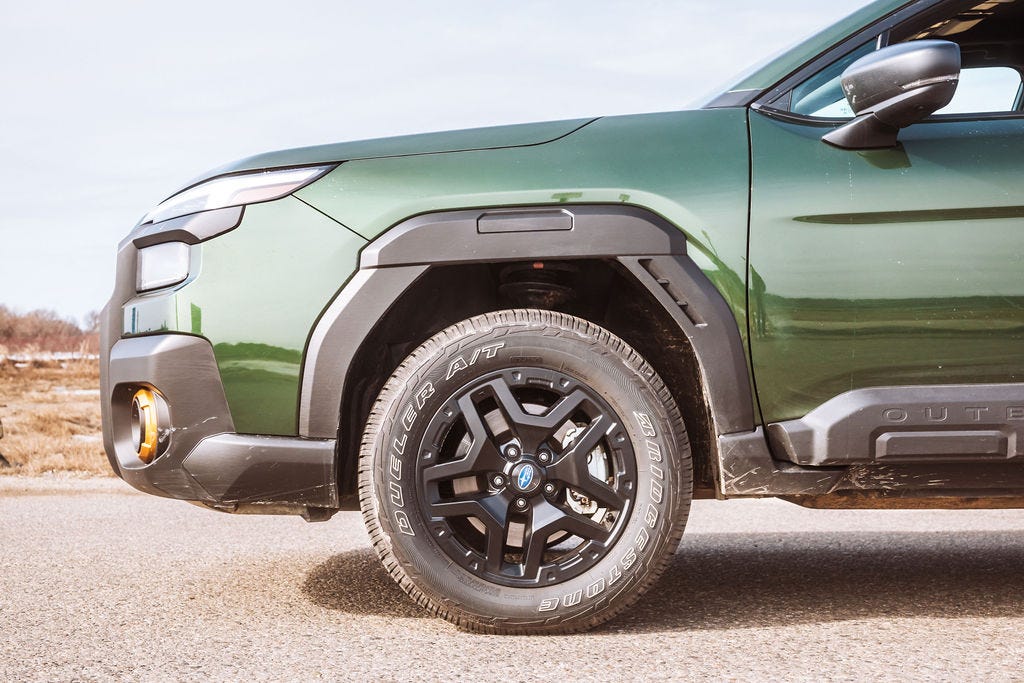
New for 2026, these electronically-controlled shocks lean on acceleration sensors in the ECU and front suspension to read road conditions in real-time and adapt accordingly. Subaru was aiming for a skyhook-level of damping, and I’d say they succeeded. From frost heaves to ragged potholes, this Outback breezed through with aplomb.
Finally, there’s the Dual Function X-Mode feature. X-Mode comes standard across the 2026 Outback lineup and promises improved traction in snow and dirt by limiting wheelspin. This is ideal for packed surfaces, but when the going gets loose, like, say, a deep trail of snow or mud, the Dual Function version found on Wilderness models effectively switches off traction control to encourage wheel spin and forward movement.
Symmetrical AWD: What’s In A Name


You can think of X-Mode like low range in a 4WD vehicle, but the Outback is an AWD vehicle with a system worth taking a closer look at. There is no transfer case, but Subaru gets around that with its long-touted “Symmetrical” AWD technology, and in case you’re wondering, there’s more to it than just a fancy name. The symmetry of this system is literal.
It starts with the boxer-4 engine. Longitudinally mounted, it is split in half across the Outback’s center line. This configuration allows for equal-length axle shafts, furthering the symmetrical design, while the relatively flat engine lowers the center of gravity. It’s all part of the Japanese automaker’s effort to deliver balanced vehicle control in all conditions, which comes in very handy when those conditions get slick.
As for the AWD system, it’s running all the time, so there’s no delay between sensors detecting slip and routing power as needed, like you might encounter in a vehicle with part-time AWD. Here in New Hampshire, where the conditions are frequently slick, snowy, and sloppy, Subarus are de rigueur, and after driving this Outback Wilderness for a while, it’s easy to see why.
260 Turbocharged Horses


Composed and confident in the wet, the Wilderness is also speedy. While base models come with a naturally aspirated 2.4L four making 180 horsepower, the boosted 2.5L unit in these models (and XT variants) cranks up the power to 260 and the torque from 178 lb-ft to 277.
Turbo lag is well managed, and with my foot firmly planted into the gas pedal, Subaru’s new crossover felt fast. Car and Driver clocked it to 60 in 6 seconds flat, which seems about right.
That fleetness, however, is accompanied by a bit of powertrain buzzing at low speeds, a CVT that tends to drone around town, and a somewhat harsh engine start/stop system.
Adaptive Headlights Should Be Industry Standard
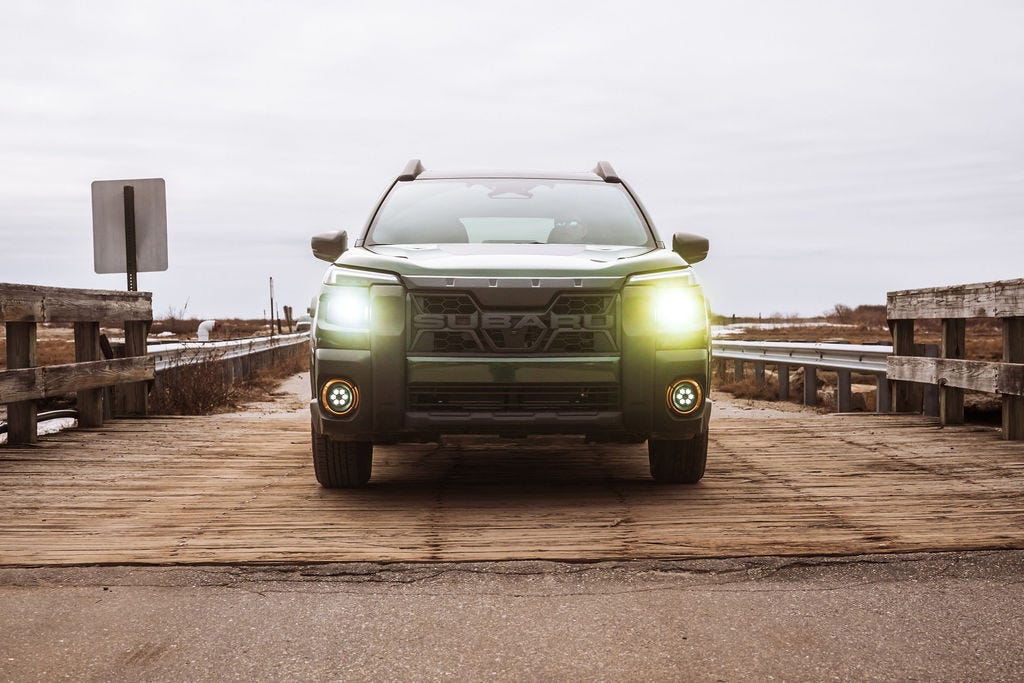
At night, there is an underrated standard Subaru feature that I quickly came to appreciate: Headlights that move in concert with the steering wheel. On a pitch-black, curvy road, this is a game-changer for visibility. Also nice for spotting otherwise hidden critters thinking about making a kamikaze run.
Inside The 2026 Outback


Inside the Outback, it’s a big and airy space, with great visibility and comfy heated seats up front. The steering wheel has a heater button perfectly placed for quick flicking on and off, but it only warms the side portions of the wheel, leaving the top half chilly. Back seat passengers, at least my kids, found enough legroom and were happy to have heated outboard cushions on cold mornings. There is, as always, no third row in the Outback, but there is a fairly cavernous cargo hold that’ll easily handle 7 carry-on bags.
The infotainment system is big and crisp, featuring a pleasant animation of the outdoors on startup and quick touchscreen response times. It abuts another large digital display for the gauge cluster that works equally well and makes it easy to keep an eye on the many advanced driver aids at work in the new Outback. Part of the company’s EyeSight system, I was impressed with the adaptive cruise control and lane-centering feature. Smooth and controlled, it did the job and left me feeling comfortable giving over the reins, even in high-speed curves.
The Outback Is Watching You


Really, the only thing that bugged me with the 2026 Outback was DriverFocus, the driver attention-monitoring system. Now in its second generation, Subaru has upgraded this tech with faster processing and a wider-angle, higher-res camera. Certainly, the system works well, maybe a little too well.
I was barked at when looking for the seat heater buttons, when glancing down at the steering wheel controls, and generally when not dead-center eyeballing the windshield. I get it, people are distracted and that’s dangerous, but I think the sensitivity could do with some dialing back, as I found myself simply turning it off.
Is Subaru’s Rough And Tumble Outback Wilderness Worth A Look?
Any Subaru Outback model is a great choice for a family of 3 or 4 looking for a practical, comfortable car that inspires confidence when driving in challenging conditions. At $36,445, to start, for the base Premium trim, the 2026 Outback is also on the affordable side, and for basic transportation, is a solid move. So what about the Wilderness version - is it worth the $10,000 upcharge?
I haven’t driven the base Outback, so I can’t be sure, but based on the power deficit and my need for speed, I’d argue the turbocharged setup alone makes it at least worth a look. As for the off-roading capability? The ground clearance, fancy dampers, trick AWD system, and all-terrain rubber promise possibilities galore when it comes to getting off-grid.
If that’s not your jam, you can enjoy the boosted engine sans the rugged upgrades in XT models. But the Outback Wilderness is prepped to make light work of challenging trails, so for those who spend any time off pavement, it’s absolutely worth a look.
About the author: Niel Stender is an automotive journalist. More of his work can be found at muckrack.com/niel-stender